
Boston Is Where You Built It. Arizona Is Where You Live the Rest of It.
For Boston residents who have spent decades building an exceptional life — and are ready to claim the outdoor season New England cannot offer — Scottsdale and Paradise Valley are waiting.
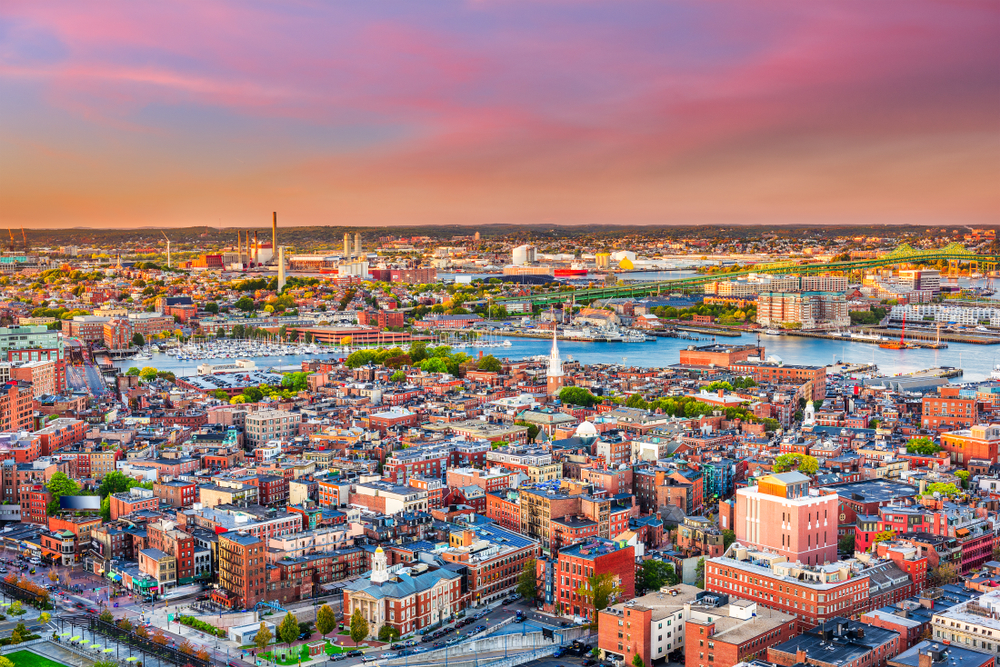
There is a particular kind of seriousness to a life built in Boston. The institutions, the neighborhoods, the professional culture that runs through medicine, law, finance, and academia — it produces people who hold everything to a high standard and have done so for a long time. You chose this city deliberately. You built something here that reflects who you are, and nothing about what follows suggests you should second-guess any of it.
What Arizona adds is the season. From November through April, Boston’s outdoor life contracts in ways that are not subtle. Golf ends. Mornings require real effort. The Charles River Esplanade, so extraordinary in October and May, becomes a cold discipline rather than a pleasure. Scottsdale and Paradise Valley run the opposite calendar: while New England waits for spring, the desert is at full capacity — championship golf through February and March, mornings on desert hiking trails under clear and generous skies, evenings on a patio where the air is warm and still and the desert light does things that are genuinely difficult to describe until you have seen them.
Greater Phoenix — Scottsdale, Paradise Valley, Arcadia — has become the winter destination of choice for serious buyers from the Northeast who already live at a high standard and have decided that the second half of the year deserves the same attention they have given the first. This is not a compromise market. The homes are extraordinary. The communities are private, carefully designed, and populated by neighbors who share the same values and expectations. The events are nationally recognized. The golf is among the finest in the country. And the season runs long, warm, and made almost entirely for outdoor living.
For the Boston buyer, the arithmetic is straightforward: you are not leaving anything behind. You are adding a second season, a second community, and a second home that will be ready the moment you want it — and completely cared for the moment you return to Beacon Hill.
Why It Resonates for Boston Residents

The Outdoor Life
Boston residents are not strangers to outdoor life. The Esplanade, the Emerald Necklace, the trails of the Blue Hills Reservation, the golf clubs of eastern Massachusetts — for the buyer who has built a life around being outside whenever the season allows, the loss of that season from November through April is felt every year. It does not improve. It is simply the price of living in one of America’s great cities.
In Scottsdale, that price does not exist. The McDowell Sonoran Preserve — more than 30,000 acres of protected desert wilderness within the city limits — offers morning hiking trails where the saguaro stand thirty feet tall, the granite boulders glow amber in the early light, and the silence is the kind that belongs to a landscape that has been there far longer than any of us. The trails are open, uncrowded, and extraordinary from October through April in a way that no Boston-area trail system can match during those same months.
Golf is the central axis of Scottsdale’s outdoor season, and for the Boston buyer who has spent decades working around a golf calendar that ends in October and resumes in May, the prospect of playing championship desert courses through January, February, and March is not a luxury abstraction — it is a specific and vivid recovery of something that was temporarily taken. Courses like Estancia, Whisper Rock, and Troon North operate at the level Boston’s best private clubs do, in terrain that is categorically unlike anything in New England, and with weather that cooperates without negotiation.
The Arizona Canal trail runs through the residential heart of Scottsdale, and the cycling culture that uses it daily is active, social, and year-round. Pickleball and tennis culture in greater Phoenix rivals the best in the Southwest — multiple courts, professional-level instruction, and outdoor conditions that hold from October through May without interruption. Pool culture is serious: the outdoor pool in a Scottsdale luxury property is a primary living space for the full season, not an occasional amenity. For the Boston buyer, this is not a different version of what you already have. It is an entirely different outdoor theater, running during the exact months yours goes dark.

The Events and Experiences
Boston residents understand what a serious events calendar looks like. The Head of the Charles, First Night, the cultural programming of the BSO and the MFA — these are occasions built around people who take the calendar seriously and expect the events that fill it to be worth their time. Arizona’s October-through-April season is built the same way, and what it delivers is nationally recognized for good reason.
The Waste Management Phoenix Open at TPC Scottsdale is the most-attended tournament on the PGA Tour. Tournament week — and particularly the famous 16th hole, where the crowd creates an atmosphere unlike anything else in professional golf — is as much a social event as a sporting one. For the golf-serious Boston buyer, attending as a homeowner rather than a visitor changes the texture of the experience entirely. You are not scheduling a trip around it. You are simply there.
Barrett-Jackson, held each January at WestWorld of Scottsdale, is the premier collector car auction in America. For the buyer who appreciates craftsmanship, engineering history, and the culture of extraordinary machines, this is a week that rewards being nearby. January in Scottsdale belongs to Barrett-Jackson the way Saratoga belongs to racing in August — the right people, the right occasion, the right place to be.
Cactus League spring training runs February through March across a dozen stadiums throughout greater Phoenix. The Boston Red Sox train in Fort Myers, Florida, but the Cactus League as a whole draws the kind of relaxed, sunny, baseball-focused afternoon that is worth building a February arrival around — and the intimacy of spring training, where the game is close and the atmosphere is unhurried, is something the regular season rarely offers. The Scottsdale Arts Festival arrives in March, drawing visitors to the Old Town gallery district for one of the Southwest’s most respected outdoor art events. Resort programming at The Phoenician, Sanctuary Camelback Mountain, and Four Seasons Scottsdale at Troon North adds a layer of curated hospitality to the season that Boston’s best hotels gesture toward but rarely match for sustained, daily-life excellence.

The Retirement Runway
For Boston residents who have spent careers in medicine, law, finance, or academia — building assets, building reputations, and building a life that reflects what they value — the question in their late fifties and sixties is not whether they have done well. It is what doing well for the next twenty years actually looks like in practice.
The answer Scottsdale and Paradise Valley consistently deliver is specific: a home base where the outdoor life runs every morning from October through April, where the social infrastructure of a private club or resort-adjacent community means neighbors and routines are already in place when you arrive, and where the physical environment — warm, dry, open, and extraordinarily clear — supports the kind of active body and unencumbered mind that decades of demanding work have earned.
Boston physicians and attorneys who purchase in greater Phoenix describe a pattern that is remarkably consistent: they planned to arrive for the season and return to Boston for summer. What they discover is that the Arizona winter season is longer, richer, and more socially rewarding than anticipated. The friendships that form within a private club community have real depth. The routines — morning golf, an afternoon hike, dinner on a patio in February — become something they do not want to abbreviate. Having two exceptional homes, each suited to its season, turns out to be exactly the design they were working toward without yet having named it.
The lock-and-leave character of the finest properties here matters enormously to buyers who have managed complexity their entire careers and are now in a position to manage less of it. A well-chosen luxury condominium in a resort-adjacent building, or a properly managed estate in a gated community, requires nothing from you when you are not there. You arrive to a home that is cool, ready, and waiting. You leave without a list. For a buyer whose professional life has been defined by relentless responsibility, that simplicity is not a step down. It is what you were working toward.

The Lifestyle Upgrade
Scottsdale’s dining, arts, and hospitality culture has matured into something that a Boston resident — accustomed to the North End, to Oleana and Menton and the serious wine culture of the Back Bay — will find genuinely surprising and genuinely rewarding. This is not a regional approximation of what excellence looks like. It is a scene that has arrived.
The restaurant landscape rewards serious curiosity: James Beard-recognized chefs working with the Sonoran Desert pantry, wine programs curated to a standard that competes with the best in the country, and an outdoor dining culture that operates at full beauty from October through April. Dinner on a Scottsdale patio in February — warm air, string lights above desert plantings, unhurried in the way that a Boston restaurant in January rarely manages to be — is one of those experiences that recalibrates what you thought you knew about winter.
The arts community is anchored by the Scottsdale Museum of Contemporary Art and surrounded by one of the densest gallery concentrations in the American Southwest, particularly along Marshall Way and through the Old Town Arts District. For Boston residents engaged with the MFA, the ICA, and the gallery culture of SoWa — a scene that is serious and well-educated — Scottsdale offers a companion environment, smaller in scale but significant in quality, and different enough in character to be genuinely interesting rather than merely adequate.
Resort hospitality at The Phoenician, Four Seasons Scottsdale at Troon North, and Camelback Inn sets a standard for service and design that is built into the fabric of greater Phoenix’s luxury culture. Living adjacent to — or within — resort-caliber communities means those standards are present not just on special occasions, but in the texture of daily life.

The Arizona Outdoor and Events Calendar
The October-through-April season in greater Phoenix is not a single sustained experience — it is a sequence of distinct moments, each one arriving in its own time and rewarding the buyer who has learned to plan around it.
October and November are the season’s opening: the desert cools from summer, hiking resumes in earnest, and the golf courses — which ran through summer for the committed — reach their finest playing conditions. The light in these months has a particular quality, golden and long, that photographers have chased in the Sonoran Desert for generations. Mornings are cool enough for a long trail run; afternoons are warm enough for the pool.
December in Scottsdale accelerates. Resort programming reaches its seasonal peak. Restaurants fill with people who have just arrived. The social calendar moves quickly — club dinners, gallery openings, the arrival of neighbors you haven’t seen since April. Golf in December is at its most refined: cool mornings, warm afternoons, no humidity, no wind worth mentioning.
January belongs to Barrett-Jackson. The collector car auction fills WestWorld for a week with the finest automotive culture in America, drawing serious buyers and enthusiasts in equal measure. It is also peak season for private club events and the kind of spontaneous social life that forms when the right people are all in the same place at the same time.
February brings the Waste Management Phoenix Open to TPC Scottsdale — the largest-attended event on the PGA Tour, and an experience that is categorically different when you are attending as a resident rather than a visitor. Cactus League spring training opens across the valley. The outdoor season is running at full strength: warm enough for a pool afternoon, cool enough for a long hike without effort.
March and April are the season’s closing gift. The Scottsdale Arts Festival draws visitors to Old Town. Spring training continues through March. Evening light stretches longer into the day. The desert wildflowers peak. And for the Boston buyer, this is often the moment when the question resolves itself — not as an intellectual exercise, but as something felt in the body. Arizona is not a place you visit at this point. It is a place you belong.
Community Match
The luxury communities of greater Phoenix reward specific choices. Each zone has a distinct character, and the right fit depends on how you intend to use the property, what kind of neighbors and social infrastructure matter most, and whether your preference runs toward the privacy of a gated estate enclave or the energy of a walkable cultural neighborhood.
Scottsdale
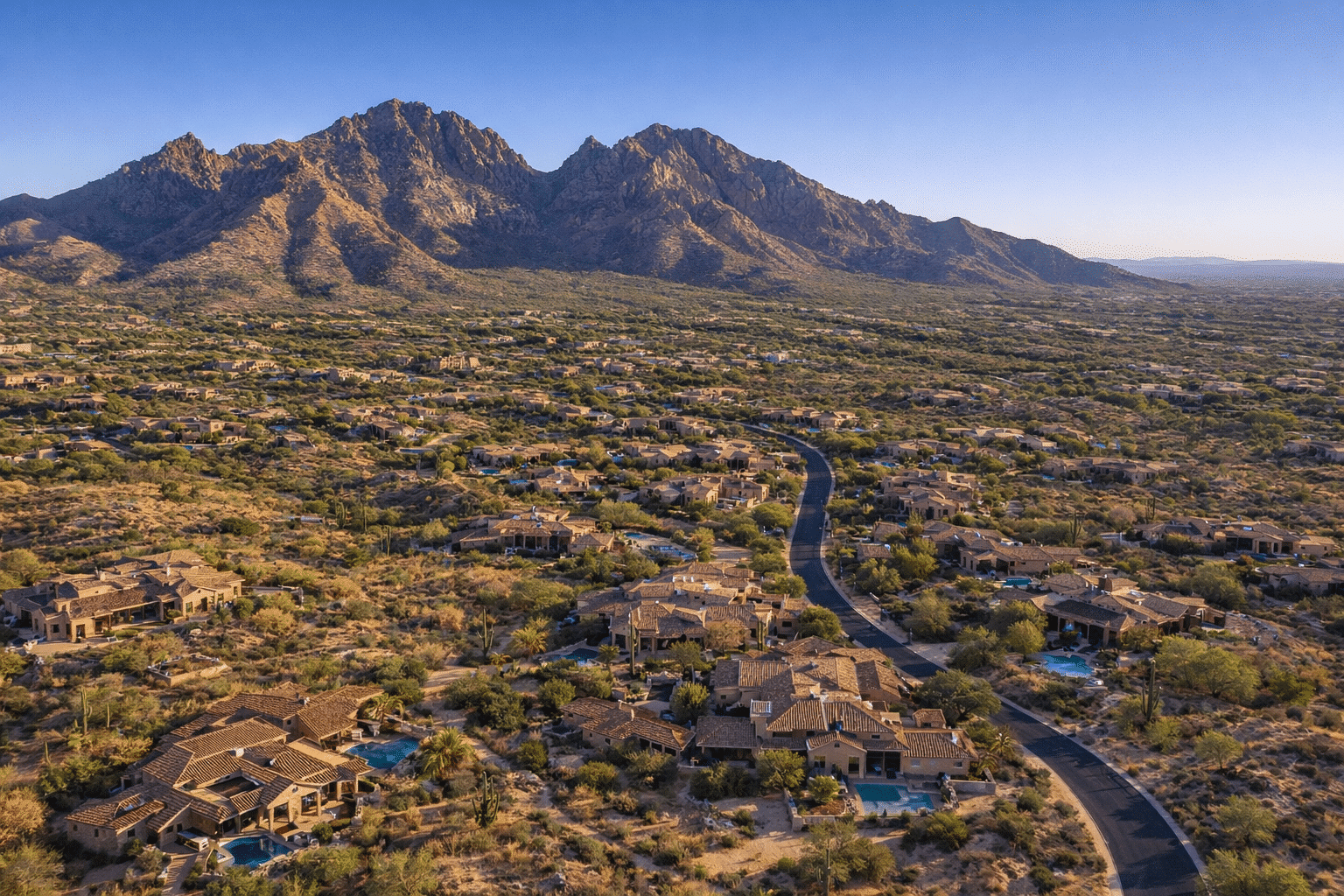
Scottsdale is the broadest and most varied of the three major luxury zones — a city that ranges from the vibrant cultural district of Old Town in the south to the dramatic high desert terrain of North Scottsdale, where communities like DC Ranch, Silverleaf, Estancia, and Troon Village define what private-club estate living looks like in Arizona.
North Scottsdale’s guard-gated communities are built around world-class golf, mountain preserve access, and intentional neighbors. Silverleaf at DC Ranch represents the top of the Scottsdale luxury market — custom estates, a private club of extraordinary quality, and a setting against the McDowell Mountains that produces a landscape unlike anything in New England. For buyers who want urban proximity alongside their luxury property, South Scottsdale and the Camelback Corridor offer high-rise condominiums and resort-adjacent residences that place the best of Old Town, the Arts District, and Camelback Mountain within walking distance or a short drive.
Paradise Valley
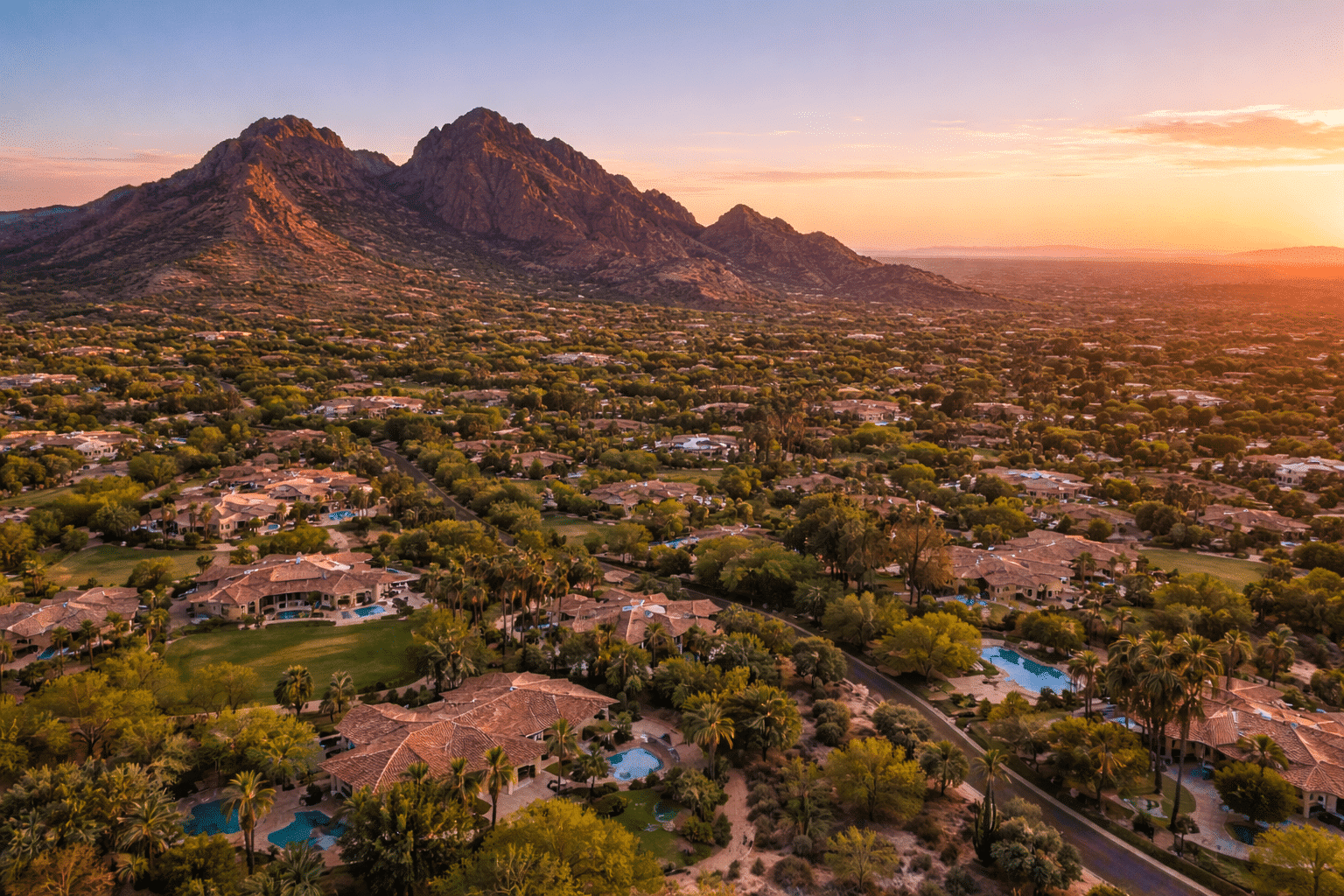
Paradise Valley is Arizona’s most exclusive residential municipality — a town of roughly 13,000 residents composed almost entirely of luxury estates, private clubs, and resort properties. There are no apartment complexes, no commercial corridors, no density. What there is: some of the finest private homes in the American Southwest, on generous parcels, framed by Camelback Mountain and Mummy Mountain in a setting that conveys privacy without isolation.
For Boston buyers accustomed to significant primary residences and a clear preference for discretion, Paradise Valley delivers something rare in any market: the full amenity infrastructure of a world-class luxury destination — resorts, exceptional dining, major events — within easy reach, without any of it visible from your property. Camelback Inn, Mountain Shadows, and The Phoenician are all within the town or immediately adjacent. Hiking access to Camelback Mountain is among the finest in Arizona.
Old Town Scottsdale and Arcadia
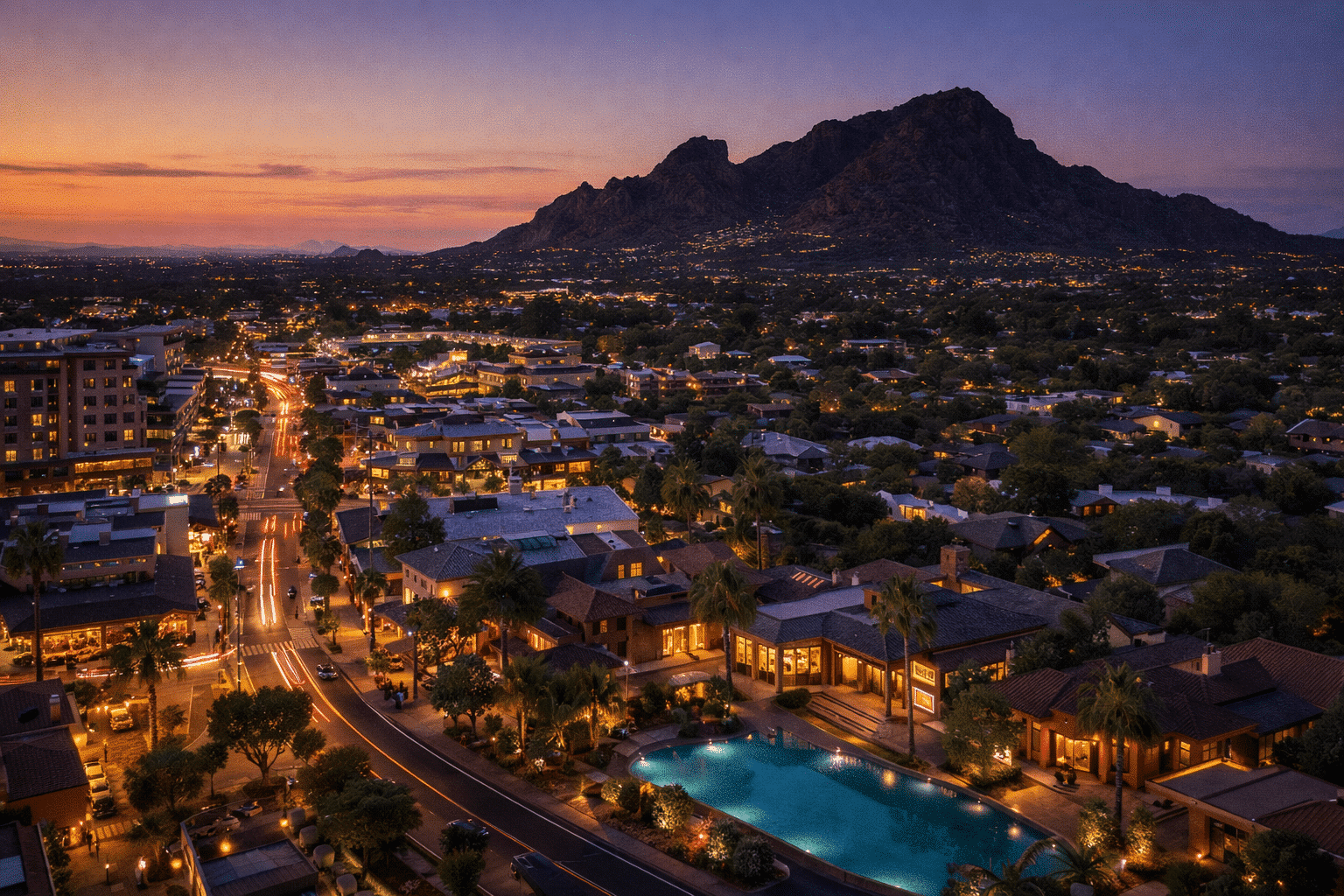
For buyers who want the energy of a walkable, culturally engaged neighborhood alongside their luxury property, Old Town Scottsdale and the adjacent Arcadia district offer an experience that is distinctly different from the gated enclaves of North Scottsdale and Paradise Valley — and, for a certain kind of Boston buyer, immediately familiar in spirit if not in form.
Old Town places you within walking distance of Scottsdale’s finest restaurants, its gallery district, boutique retail, and the programming of the city’s major cultural events. Arcadia — the neighborhood straddling Scottsdale and Phoenix along Camelback Road and the Arizona Canal — has become one of the most sought-after luxury residential pockets in the metro, known for its mature landscaping, proximity to Camelback Mountain, and a dining and café scene that draws residents from across the valley. The luxury condominium inventory in both areas is strong, and the options for a sophisticated lock-and-leave second home within this corridor are among the most compelling in the market.
Making the Move

Define how you will use the home.
The right property depends on your pattern of use. Will you arrive for the full season, October through April? Make several shorter trips per year around specific events? Use the property as a base for January and February and return to Boston in between? Your usage pattern shapes everything — property type, community, maintenance requirements, and proximity to the amenities that will matter most.

Choose your community type.
The choice between North Scottsdale’s gated estate communities, Paradise Valley’s private residential enclaves, and the walkable energy of Old Town and Arcadia is not a ranking — it is a lifestyle match. Work with a buyer’s agent who knows all three zones thoroughly and can walk you through how each one actually feels to live in, not just visit.

Understand the luxury condo versus estate decision
For many second-home buyers, a luxury condominium in a resort-adjacent building offers significant advantages: professional management, no exterior maintenance, complete security, and the ability to arrive and depart without managing a property. For others, the privacy, space, and personalization of a private estate is the only answer. Both options exist at the highest level of quality in greater Phoenix, and the right choice depends on how you intend to use the home.

Work with a specialist.
Arizona’s luxury second-home market moves quickly, and the finest properties are frequently transacted before they reach broad public exposure. A buyer’s agent with deep relationships in this market — and specific experience guiding out-of-state buyers through the process — is not a convenience. It is how you find the right home and avoid the costly version of learning the market from scratch.

Plan your first season.
The most consistent feedback from new Arizona second-home owners, regardless of where they came from: they wished they had done it sooner. Plan to spend enough of the first season in the property to experience what the community actually is — not as a guest or visitor, but as a resident who belongs. The difference is significant.
What to Look for in a Luxury Second Home
Lock-and-leave readiness.
The home should function completely without you. That means HOA or property management infrastructure that handles exterior maintenance, readiness on arrival, and security during your absence — so that returning feels like walking into something cared for, not catching up on what accumulated while you were gone.
Outdoor living quality.
The patio, pool, and outdoor kitchen are not secondary amenities in this market. They are the primary living space for five months of the year. A home with a magnificent interior and a compromised outdoor environment is a missed opportunity in Scottsdale in a way it would not be anywhere in New England.
Community alignment.
The neighbors, club culture, and social infrastructure of the community you choose will shape your Arizona experience as much as the home itself. Spend time in the community during peak season — January or February — before making a commitment. The difference between a community on paper and a community in practice is always worth knowing firsthand.
Trail and course access.
Golf members should be within a reasonable distance of their club. Event enthusiasts should consider proximity to TPC Scottsdale, WestWorld, and Old Town. Hikers should look carefully at access to Camelback Mountain, the McDowell Sonoran Preserve, and South Mountain Park. The property that is right in every other way but inconveniently located from what you will actually do is a property you will eventually find wanting.
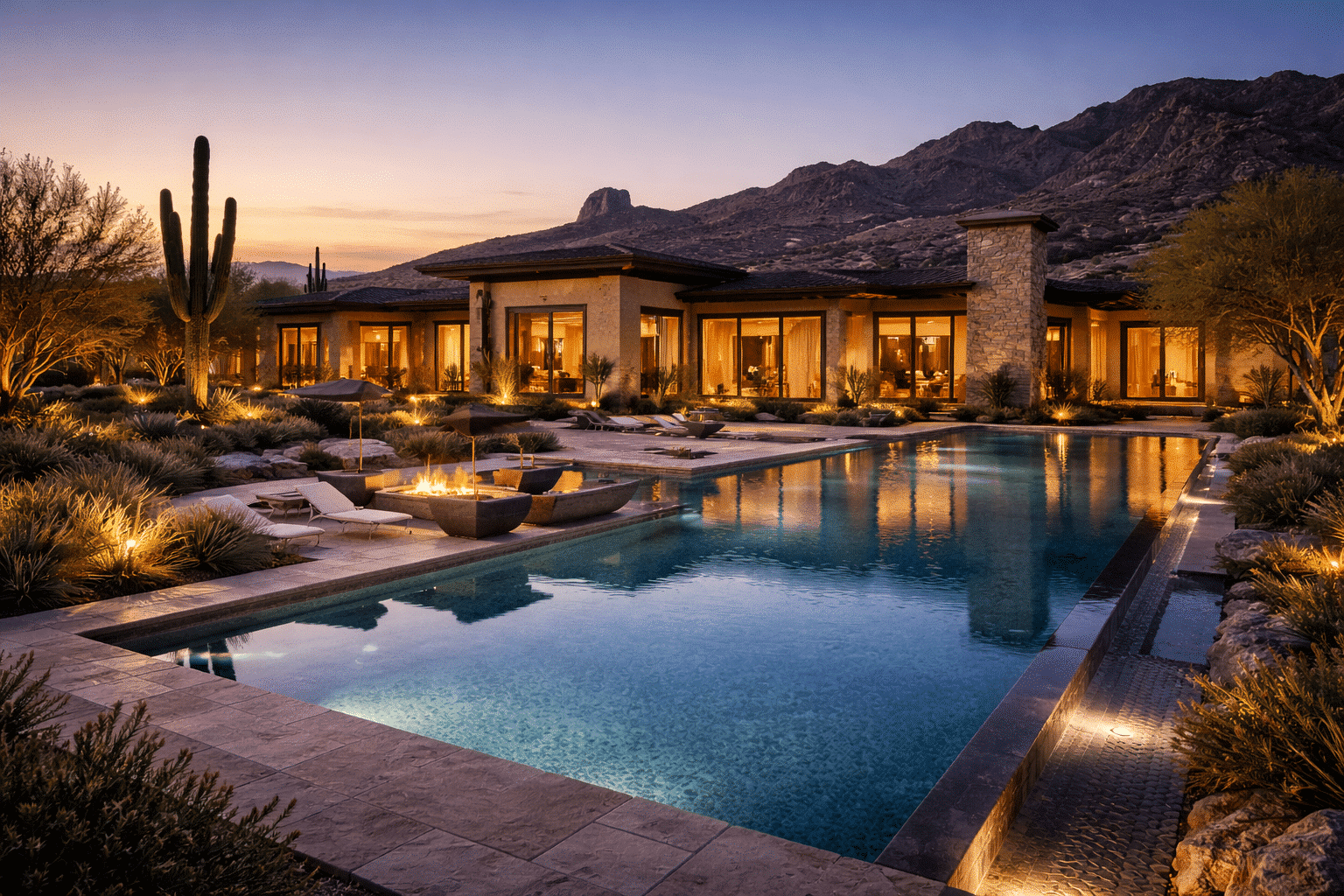
Elevate Your Lifestyle
Boston gave you the architecture, the institutions, the seasons that make autumn extraordinary and spring feel like a reward. What it cannot give you is February — not the February you want, with golf in the morning and a warm patio in the evening and a desert landscape that is quietly, stubbornly beautiful in a way that has nothing to do with what New England is doing.
The buyers who find their way to a second home in Scottsdale or Paradise Valley are not the ones who stopped believing in the city they built their careers in. They are the ones who decided that holding one place in high regard was no reason to leave another one undiscovered.
The season opens in October. The courses are already green.
Ready to explore luxury second homes in Scottsdale and Paradise Valley?
Carl Chapman, REALTOR® at West USA Realty, specializes in helping out-of-state buyers find the right home in Arizona’s luxury market — without the learning curve.